
Difference Between Coarse Aggregate and Fine Aggregate
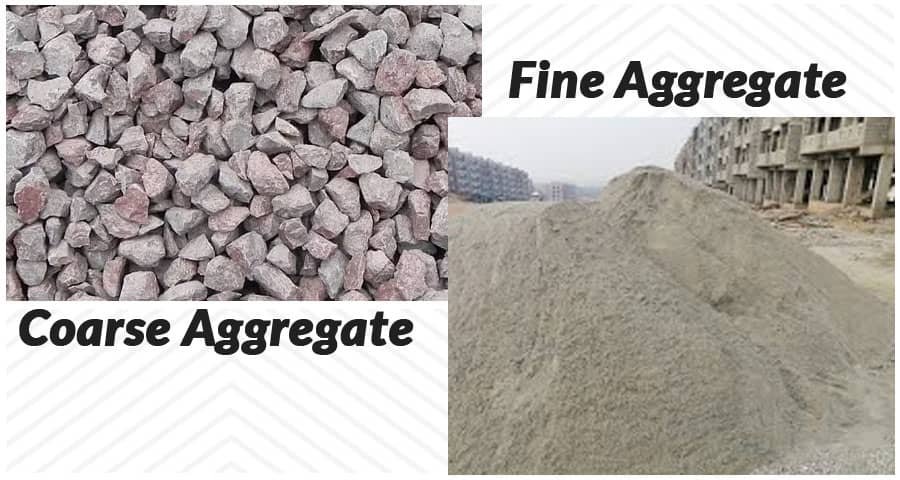
In the field of construction and civil engineering, aggregates play a crucial role in determining the strength, durability, and performance of concrete and mortar. Aggregates are generally classified into two broad categories: coarse aggregate and fine aggregate. While both serve the purpose of enhancing the mechanical and structural properties of concrete, their characteristics, applications, and properties differ significantly. Understanding these differences is vital for selecting the right material in any construction project.
What Are Aggregates in Construction?
Aggregates are granular materials such as sand, gravel, crushed stone, and slag that are mixed with binding agents like cement or lime to form concrete or mortar. They occupy about 60 - 75% of the total concrete volume, making them a fundamental component that directly affects the quality, strength, and durability of the final product.
Aggregates are broadly categorized into:
- Coarse Aggregate (particles larger than 4.75 mm)
- Fine Aggregate (particles smaller than 4.75 mm)
Definition of Coarse Aggregate
Coarse aggregate refers to particles that are retained on a 4.75 mm IS sieve. They consist of gravel, crushed stones, or natural rock fragments, typically ranging between 5 mm and 80 mm in size.
These aggregates are mainly responsible for:
- Providing bulk and strength to concrete
- Enhancing load-bearing capacity
- Reducing shrinkage and cracks
- Forming the framework or skeleton of concrete mass
Common types of coarse aggregates include:
- Crushed stone
- Gravel
- Granite
- Limestone

Definition of Fine Aggregate
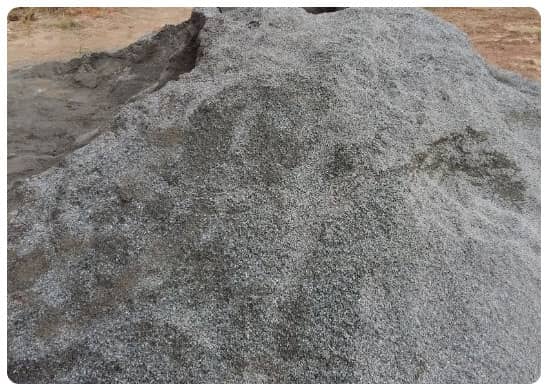
Fine aggregate refers to particles that pass through a 4.75 mm IS sieve but are retained on a 75-micron sieve. These are smaller particles such as sand, stone dust, or crushed stone fines, usually ranging from 0.075 mm to 4.75 mm in size.
Fine aggregates are crucial for:
- Filling voids between coarse aggregates
- Ensuring workability and smooth finish of concrete
- Contributing to durability and impermeability
- Reducing the amount of cement paste required
Common types of fine aggregates include:
- Natural sand (river sand, pit sand)
- Manufactured sand (M-sand)
- Crushed stone dust
Key Differences Between Coarse Aggregate and Fine Aggregate
| Property | Coarse Aggregate | Fine Aggregate |
|---|---|---|
| Size | Larger than 4.75 mm | Between 0.075 mm and 4.75 mm |
| Examples | Gravel, crushed stones, boulders | Sand, stone dust, M-sand |
| Function | Provides strength and bulk | Fills voids and improves workability |
| Surface Area | Lower surface area | Higher surface area |
| Workability of Concrete | Reduces workability if in excess | Improves workability and finishing |
| Unit Weight | Heavier (around 1450 - 1550 kg/m3) | Lighter (around 1250 - 1350 kg/m3) |
| Porosity | Less porous | More porous |
| Cement Requirement | Requires less cement paste | Requires more cement paste |
| Sieve Analysis | Retained on 4.75 mm sieve | Passes through 4.75 mm sieve |
Grading of Aggregates
The grading of aggregates is essential to ensure the correct proportions in concrete.
- Coarse Aggregate Grading:
- Well-graded aggregates minimize voids, reducing cement requirement.
- Poorly graded aggregates create gaps, leading to honeycombing and weak concrete.
- Fine Aggregate Grading:
- Divided into four zones (Zone I to Zone IV) as per IS:383.
- Zone I has coarser particles, while Zone IV has finer particles.
- Proper grading improves workability and reduces segregation.
Applications of Coarse Aggregate
- Concrete Production: Main skeleton for reinforced and plain concrete.
- Railway Ballast: Provides strength and stability to railway tracks.
- Road Construction: Used as base material for highways and pavements.
- Drainage Systems: Facilitates water percolation in sub-base layers.
Applications of Fine Aggregate
- Plastering: Provides smooth finish to walls and ceilings.
- Masonry Mortar: Used in brickwork and blockwork.
- Concrete Mix: Enhances cohesion and workability in mixes.
- Grouting and Filling: Fills small gaps and voids in construction.
Importance of Proper Proportioning of Aggregates
The strength and durability of concrete depend on the right balance of coarse and fine aggregates. An improper mix can lead to:
- Excessive shrinkage
- Low strength
- Poor workability
- Increased permeability
Standard design mixes are used to ensure correct water-cement ratio, aggregate size, and distribution for achieving the desired strength and quality.
Durability Considerations of Aggregates
- Coarse Aggregates must be clean, hard, and free from dust or clay to prevent weak bonding.
- Fine Aggregates must not contain silt, organic matter, or excessive clay, as these reduce strength and durability.
- Aggregates must undergo tests like impact test, crushing test, and abrasion test to ensure quality compliance.
Conclusion
Both coarse aggregate and fine aggregate are integral to construction materials, but their roles differ greatly. Coarse aggregates form the structural framework, ensuring strength and load-bearing capacity, while fine aggregates enhance workability, fill voids, and provide a smoother finish. A proper balance of both ensures durable, strong, and sustainable construction.
Please view the following short video for Coarse Aggregate and Fine Aggregate
Also Read:
 Mighty Excavator: Unearthing the Power Beneath