
Door Frame: Parts and Types Used in House Construction
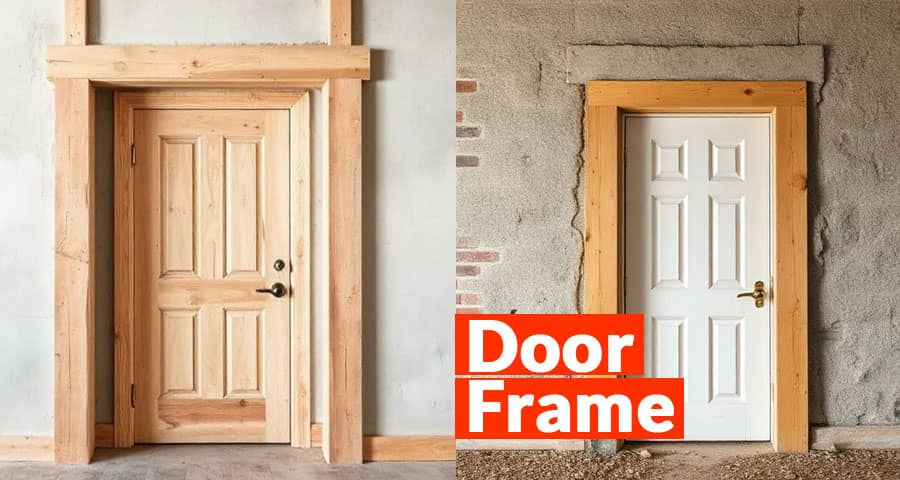
A door frame is one of the most essential structural and aesthetic components in residential architecture. It not only provides support to the door but also ensures proper alignment, durability, and functionality. Understanding the parts of a door frame and the types of door frames used in houses helps homeowners, architects, and builders choose the right design for strength, longevity, and style.
What is a Door Frame?
A door frame is the structure that surrounds and supports a door. It typically consists of vertical and horizontal members that hold the door in place, ensuring smooth operation while enhancing the strength of the wall opening. Door frames can be constructed from wood, metal, uPVC, or composite materials, depending on the design requirements and budget.
Main Parts of a Door Frame
A door frame is composed of multiple elements, each serving a unique function. Below are the essential parts of a door frame:
1. Head (Top Rail or Lintel)
The head is the horizontal member located at the top of the frame. It provides stability and carries the load from the wall above the opening.
2. Jambs
The jambs are the vertical sides of the frame. They support the door, hinges, and locks. There are two types:
- Hinge Jamb - where the hinges are fixed.
- Strike Jamb - where the lock and latch are attached.
3. Sill (Threshold)
The sill or threshold is the bottom part of the frame. It provides a base for the door, prevents dust and water from entering, and ensures a smooth transition between floors.
4. Mullion
A mullion is the vertical or horizontal bar that separates two adjoining doors or panels within a frame.
5. Transom
The transom is a horizontal beam placed above the door opening, often with a glass panel, allowing light and ventilation into the interior.
6. Stop
The door stop is a thin strip attached to the frame, preventing the door from swinging beyond its closed position. It enhances security and ensures proper closure.
7. Horns
Horns are the projections of the head and sill beyond the face of the wall. They provide extra strength and anchorage when fixing the frame into masonry.
8. Rebate
The rebate is the groove or recess cut into the frame to house the door shutter, ensuring a snug fit.
Types of Door Frames Used in Houses
Depending on material, design, and function, several types of door frames are used in homes. Let's explore them in detail:
1. Wooden Door Frames
Wooden door frames are the most traditional and widely used option. They are durable, versatile, and aesthetically pleasing. Popular woods include teak, sal, deodar, and oak.
Advantages:
- Strong and long-lasting
- Can be carved or customized
- Provides a premium look
Disadvantages:
- Susceptible to termites and moisture
- Requires regular maintenance
2. Steel Door Frames
Steel door frames are highly durable and resistant to fire, termites, and weather. They are widely used in modern homes and commercial buildings.
Advantages:
- Fire and termite resistant
- Long lifespan
- Low maintenance
Disadvantages:
- Limited aesthetic appeal compared to wood
- Can rust if not treated properly
3. Aluminium Door Frames
Aluminium frames are lightweight, corrosion-resistant, and ideal for contemporary architecture. They are often paired with glass panels for a sleek look.
Advantages:
- Resistant to corrosion
- Modern and elegant appearance
- Lightweight yet strong
Disadvantages:
- Lower thermal insulation
- Expensive compared to steel

4. uPVC Door Frames
Unplasticized Polyvinyl Chloride (uPVC) frames are gaining popularity due to their durability and low maintenance. They are commonly used for sliding and hinged doors.
Advantages:
- Termite-proof and moisture-resistant
- Energy-efficient with good insulation
- Available in various finishes
Disadvantages:
- Limited structural strength for heavy doors
- Not suitable for traditional designs
5. Composite Door Frames
Composite frames are made from a mix of materials like wood, plastic, and resins, offering the combined benefits of strength, durability, and low maintenance.
Advantages:
- High resistance to rot, termites, and weather
- Strong and durable
- Available in multiple finishes
Disadvantages:
- Higher initial cost
- Limited availability in some regions
Different Frame Designs Based on Function
Apart from materials, door frames are also categorized by their design and function:
1. Open Door Frame
This frame has only the vertical jambs and head, without a sill. Commonly used for interior doors where no threshold is needed.
2. Closed Door Frame
Includes head, jambs, and sill, providing a fully enclosed frame. Often used for exterior doors to block dust, insects, and moisture.
3. Inward Opening Frame
Designed for doors that swing into the room. Commonly used in residential interiors.
4. Outward Opening Frame
Made for doors that swing outward, typically used in external entrances for safety and space optimization.
5. Double Rebate Frame
These frames have two grooves or rebates, allowing two shutters to be fixed. Useful for double doors or soundproof rooms.
6. Fanlight or Overhead Frame
A frame with a small glass panel or louver above the door, often seen in traditional houses for ventilation.
Factors to Consider When Choosing a Door Frame
When selecting the right door frame for your house, consider:
- Material durability (wood, steel, aluminium, uPVC, or composite)
- Aesthetic style (modern, traditional, minimalistic)
- Exposure to weather and moisture
- Maintenance requirements
- Security features
- Budget constraints
Conclusion
A door frame is more than just a supporting structure?it plays a vital role in the strength, security, and beauty of a house. From wooden frames with classic elegance to modern aluminium and uPVC frames, the right choice enhances both functionality and aesthetics. Understanding the parts and types of door frames allows homeowners and builders to make informed decisions that ensure durability, style, and long-term value.
Please watch the following short video for Door Frame
Also Read:
 How to Determine the Number of Tiles Required for a Flooring