
Types of Stirrups in Reinforcement: Complete Guide for Structural Strength and Stability
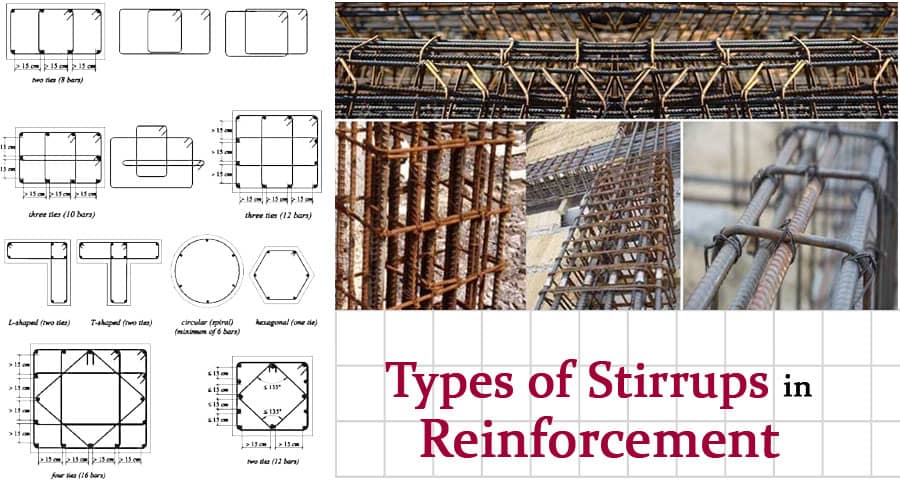
Introduction to Stirrups in Reinforcement
In reinforced concrete structures, stirrups play a critical role in ensuring structural integrity, shear resistance, and confinement of longitudinal reinforcement. We use stirrups primarily in beams and columns to hold the main bars in position while enhancing the load-carrying capacity of the structure. Without properly designed stirrups, even the strongest concrete and steel combinations can fail under shear forces.
This comprehensive guide explores the types of stirrups in reinforcement, their shapes, functions, spacing, and practical applications used in modern construction.
What Are Stirrups in Reinforcement?
Stirrups are closed-loop reinforcement bars placed perpendicular to the longitudinal reinforcement in beams and columns. Their main functions include:
- Resisting shear forces
- Preventing buckling of longitudinal bars
- Providing confinement to concrete core
- Maintaining proper spacing of main reinforcement
We typically fabricate stirrups from mild steel or high-yield strength deformed (HYSD) bars, depending on design requirements.
Importance of Stirrups in Structural Design
Stirrups are essential because they:
- Improve ductility and toughness of structures
- Prevent sudden brittle failure
- Increase load-bearing capacity
- Enhance earthquake resistance
In seismic zones, properly spaced stirrups become even more crucial for structural safety.
Types of Stirrups in Reinforcement
1. Single-Legged Stirrups
Single-legged stirrups consist of one vertical bar with hooks at both ends. These are used in:
- Lightly loaded beams
- Secondary structural members
Advantages:
- Easy to fabricate
- Cost-effective for small projects
Limitations:
- Lower shear resistance
- Not suitable for heavy structural loads
2. Two-Legged Stirrups
Two-legged stirrups are the most commonly used type. They consist of two vertical legs connected by horizontal bars, forming a rectangular shape.
Applications:
- Reinforced concrete beams
- Columns in residential and commercial structures
Key Benefits:
- Balanced shear resistance
- Uniform distribution of forces
- Improved structural stability
3. Four-Legged Stirrups
Four-legged stirrups include four vertical legs, providing enhanced confinement and strength.
Used in:
- Heavily loaded beams
- Bridge girders
- Industrial structures
Advantages:
- Superior shear strength
- Better confinement of reinforcement
- Increased durability under high loads
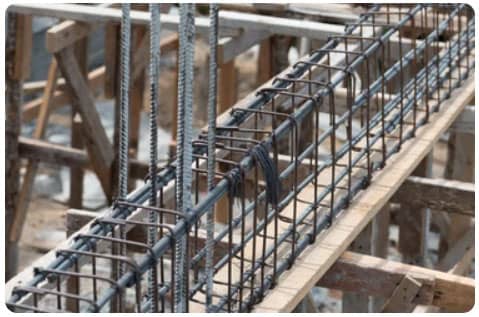
4. Circular Stirrups (Spiral Stirrups)
Circular or spiral stirrups are continuous helical reinforcement bars used mainly in columns.
Applications:
- Circular columns
- Pile foundations
Key Features:
- Excellent confinement of concrete
- High resistance to lateral expansion
- Ideal for seismic regions
5. Rectangular Stirrups
Rectangular stirrups are the most widely used due to their compatibility with beam and column shapes.
Uses:
- Rectangular beams
- Columns in framed structures
Advantages:
- Easy to install
- Efficient in resisting shear forces
- Standard in most construction practices
6. Square Stirrups
Square stirrups are a variation of rectangular stirrups, specifically used in square columns.
Benefits:
- Uniform confinement
- Simple design and fabrication
- Cost-efficient
7. Diamond-Shaped Stirrups
Diamond-shaped stirrups are placed diagonally within rectangular sections to enhance performance.
Applications:
- Special structural elements
- Earthquake-resistant structures
Advantages:
- Improved load distribution
- Enhanced resistance to diagonal shear cracks
8. Multi-Legged Stirrups
Multi-legged stirrups consist of more than four legs and are used in large structural members.
Used in:
Wide beams
Heavy-duty columns
Key Benefits:
- Maximum shear resistance
- Superior structural performance under heavy loads
Shapes of Stirrups Used in Construction
We commonly use the following shapes in reinforcement work:
- Rectangular shape
- Square shape
- Circular (spiral) shape
- Triangular shape (rare applications)
- Diamond shape
The choice of shape depends on the cross-section of the structural member and load requirements.
Spacing of Stirrups
Proper spacing of stirrups is crucial for structural safety. It depends on:
- Shear force acting on the member
- Type of loading
- Beam or column dimensions
Standard guidelines:
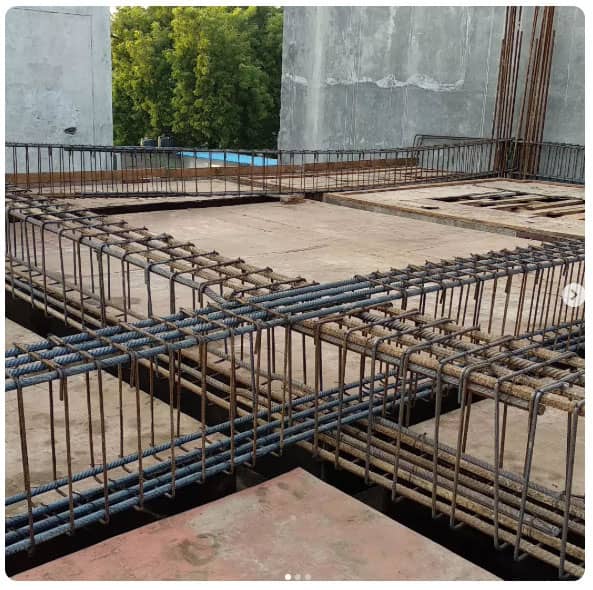
- Near supports: closer spacing (100 mm - 150 mm)
- Mid-span: wider spacing (150 mm - 300 mm)
Closer spacing is required in areas with high shear stress.
Hook Types in Stirrups
Hooks ensure proper anchorage of stirrups. Common types include:
- 90-degree hook
- 135-degree hook (preferred for seismic design)
- 180-degree hook
The 135-degree hook is widely used because it provides better anchorage and prevents opening under stress.
Material Used for Stirrups
We generally use:
- Mild steel bars
- High-yield strength deformed bars (Fe 415, Fe 500)
HYSD bars are preferred due to their:
- Higher strength
- Better bonding with concrete
- Improved durability
Role of Stirrups in Shear Resistance
Stirrups act as shear reinforcement by:
- Preventing diagonal cracking
- Holding cracked sections together
- Transferring shear forces safely
Without stirrups, beams can fail suddenly due to shear failure, which is dangerous and unpredictable.
Stirrups in Columns
In columns, stirrups:
- Provide lateral support to longitudinal bars
- Prevent buckling under compression
- Improve load-carrying capacity
In seismic zones, we use closely spaced stirrups to enhance ductility.
Stirrups in Beams
In beams, stirrups:
- Resist shear forces
- Maintain alignment of main reinforcement
- Improve overall beam strength
The maximum shear force occurs near supports, which is why stirrup spacing is reduced in those areas.
Advantages of Using Proper Stirrups
- Increased structural safety
- Enhanced durability
- Better load distribution
- Improved earthquake resistance
- Prevention of sudden structural failure
Common Mistakes to Avoid
- Using incorrect spacing
- Improper hook angles
- Weak material selection
- Poor placement during construction
Avoiding these mistakes ensures long-term performance and safety.
Conclusion
Understanding the types of stirrups in reinforcement is essential for designing safe and durable structures. From single-legged to multi-legged stirrups, each type serves a specific purpose depending on the load and structural requirements. Proper selection, spacing, and installation of stirrups significantly improve shear resistance, confinement, and overall structural stability.
By implementing the correct stirrup design, we ensure that reinforced concrete structures remain strong, resilient, and capable of withstanding various loading conditions, including seismic forces.
Please watch the following short video for Types of Stirrups in Reinforcement
Also Read:
 Soffit and Fascia: Complete Guide for Home Exterior Protection and Aesthetics
Brick Bat Coba Waterproofing - Ultimate Guide for Durable Roof Protection
What Is Septic Tank | How Does A Septic Tank Work | Septic Tank Design Based Per User Consumption
Cement Ingredients: A Comprehensive Guide to Key Components and Their Functions