
What Is Septic Tank | How Does A Septic Tank Work | Septic Tank Design Based Per User Consumption
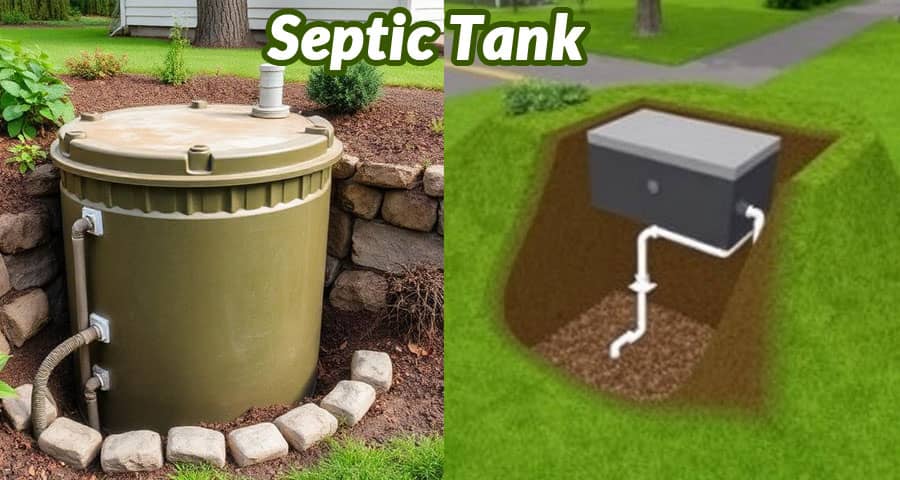
A septic tank is an essential wastewater treatment structure used in residential and commercial properties located beyond municipal sewage systems. It plays a vital role in managing household sewage, ensuring environmental protection, groundwater safety, and hygienic waste disposal. Understanding what a septic tank is, how a septic tank works, and how septic tank design varies based on per-user water consumption is crucial for architects, civil engineers, builders, and homeowners.
What Is a Septic Tank?
A septic tank is a watertight underground chamber constructed using concrete, brick masonry, PVC, or fiberglass, designed to collect, treat, and partially decompose household wastewater. The tank relies on natural biological processes where microorganisms break down organic solids, reducing sludge accumulation and converting waste into effluent. This effluent is then discharged into a soil absorption system or soakaway pit for further purification.
Septic tanks are extensively used in rural homes, farmhouses, resorts, independent houses, and industrial units where a centralized sewer system is absent. They are a cost-effective and sustainable wastewater treatment option.
How Does a Septic Tank Work?
1. Wastewater Inlet
All wastewater from toilets, sinks, bathrooms, and kitchens flows into the septic tank through an inlet pipe. The tank is engineered to facilitate smooth wastewater entry without disturbing settled sludge.
2. Sedimentation Process
Inside the septic tank, wastewater undergoes gravity separation:
- Heavy solids settle at the bottom forming sludge
- Grease, fats, and oils float to the top forming scum
- Liquid effluent occupies the middle layer
This natural stratification is essential for bacterial decomposition.
3. Anaerobic Digestion
The septic tank contains anaerobic bacteria that feed on organic waste. These bacteria digest sludge, reducing its volume and producing gases like methane and carbon dioxide. This biochemical process is crucial for minimizing sludge buildup and maintaining system efficiency.
4. Effluent Discharge
After partial, biological treatment, the liquid effluent exits the tank through an outlet pipe and flows into a soak pit, drain field, or leach field, where further filtration takes place. This ensures:
- Groundwater remains uncontaminated
- Soil microorganisms complete final purification
- Odor-free and safe disposal of wastewater
Components of a Septic Tank
A well-designed septic tank comprises:
| Component | Function |
|---|---|
| Inlet Pipe | Channels wastewater into tank |
| Baffle Walls | Prevents sudden mixing and stabilizes flow |
| Chambers | Ensure step-wise sedimentation and digestion |
| Manhole Cover | Access for inspection and cleaning |
| Outlet Pipe | Discharges treated effluent |
| Vent Pipe | Releases gases and prevents pressure build-up |

Materials Used for Septic Tank Construction
1. RCC (Reinforced Cement Concrete)
- Highly durable, long lifespan
- Resistant to groundwater infiltration
- Ideal for permanent installations
2. Brick Masonry Tanks
- Economical but less durable
- Suitable for small rural residences
3. PVC or Plastic Tanks
- Lightweight and portable
- Quick installation
- Less prone to chemical corrosion
4. FRP (Fiber Reinforced Plastic) Tanks
- Superior strength
- Easy to transport
- Longer operational life
Septic Tank Design Based on Per User Consumption
Septic tank size depends primarily on number of users and daily water consumption. The standard calculation considers liters per capita per day (LPCD), assuming typical wastewater discharge values.
Standard Per User Water Consumption Assumptions
| Activity | Water Use (LPCD) |
|---|---|
| Toilet Use | 30 - 70 liters |
| Bathing | 50 - 90 liters |
| Kitchen & Cleaning | 30 - 50 liters |
| Total | 80 - 160 LPCD |
Septic Tank Size Calculation Formula
The septic tank capacity can be estimated using:
Capacity (Liters) = Number of Users x 120 liters x 2 Days Retention
For domestic usage, 120 liters per person per day is commonly adopted.
Recommended Septic Tank Sizes
| No. of Users | Minimum Tank Size (m3) | Dimensions (m) |
|---|---|---|
| 5 Persons | 1.5 m3 | 1.5 x 1.0 x 1.0 |
| 10 Persons | 3.0 m3 | 2.0 x 1.5 x 1.0 |
| 15 Persons | 4.5 m3 | 2.5 x 1.5 x 1.2 |
| 50 Persons | 10.0 m3 | 4.0 x 2.0 x 1.25 |
Septic Tank Design Guidelines
To ensure efficient performance:
- Retention time: Minimum 24 - 48 hours
- Inlet pipe slope: 1 in 50
- Tank shape: Rectangular preferred
- Distance from building: Minimum 10 meters
- Chamber division: At least two compartments
- Ventilation: Mandatory vent pipe to release gases
Advantages of Septic Tanks
- Eco-friendly wastewater treatment
- Low maintenance cost
- Independent operation without sewer system
- Long service life when maintained properly
- Reduces groundwater contamination
Maintenance Tips for Longer Septic Tank Life
- Pump out sludge every 2 - 3 years
- Avoid disposing chemicals, oils, and plastics
- Prevent tree roots near tank and soak pit
- Conduct periodic inspections
- Reduce excessive water wastage
Conclusion
A septic tank is a sustainable, scientifically engineered solution for wastewater management, ensuring safe disposal of sewage where public sewer systems are unavailable. Understanding septic tank design based on per user water consumption enables homeowners and professionals to construct efficient systems that last for decades. A well-designed septic tank, combined with proper maintenance, ensures hygiene, environmental safety, and long-term operational reliability.
Please watch the following short video for Septic Tank
Also Read:
 The Rise of Prefabrication: Modern Tools for Off-Site Construction